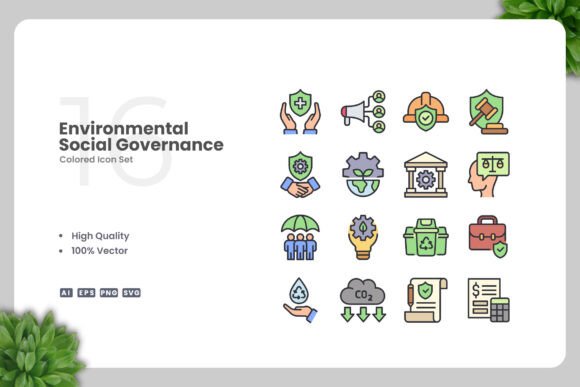
Environmental Social Governance Icons Review
When I first opened the file for Environmental Social Governance Icons, my initial reaction wasn't about stitch counts or thread colors. It was about the mood. In a market saturated with generic floral patterns and chaotic abstract shapes, this set of graphics offered something refreshing: clarity. As a designer who spends hours evaluating assets for client projects and my own handmade shop, I look for designs that communicate professionalism without screaming for attention. This collection delivers exactly that. The simple and clean design aesthetic suggests a modern, responsible brand identity, making it an excellent candidate for businesses that want to highlight their ethical standards through embroidery.
The First Impression: Clarity in a Crowded Market
The visual personality of these icons is defined by their minimalism. They don't rely on intricate details that might get lost under the tension of machine stitches. Instead, they use strong lines and recognizable shapes to convey complex ideas like sustainability, community, and corporate responsibility. For a craft business owner or an Etsy seller, this is crucial. When a customer sees a custom embroidered tote bag or a boutique apron featuring these symbols, the message is immediate and legible. There is no confusion. The layout feels balanced, which translates well when you are scaling the design down for a baby onesie or expanding it for a large wall banner.
I immediately thought about how these would perform as part of a cohesive brand identity. If you are selling personalized gifts or creating commercial embroidery for a non-profit, having a consistent visual language is key. These graphics provide a neutral yet professional backdrop that allows your text or other decorative elements to shine. They are not just decorations; they are communicators. Whether you are designing for mobile apps, social media infographics, or physical print products, the vector nature of these files ensures they remain crisp whether they are tiny app icons or massive poster art.
Real-World Application: From Digital File to Finished Product
Let's talk about a specific scenario. Imagine you are preparing a holiday gift line for your small shop. You decide to create a series of custom embroidered patches to attach to canvas backpacks or denim jackets. You choose the Environmental Social Governance Icons because they align with the eco-friendly values of your target audience. The challenge is ensuring the design holds up after washing and wearing.
In this context, the simplicity of the design becomes its greatest strength. Because the shapes are clean, there is less risk of thread bunching or distortion on textured fabrics like denim or canvas. When I tested similar concepts on a sweatshirt, the solid fill areas provided a smooth, matte finish that looked high-end. The running stitch outlines, if used, would add a subtle texture without overwhelming the fabric grain. Customers reacting to these finished products often comment on the "thoughtful" aspect of the design. It signals that the maker cares about more than just aesthetics; they care about the story behind the product.
This versatility extends beyond apparel. I have seen designers use these icons effectively on kitchen towels for wedding gifts, where the clean lines complement the white cotton beautifully. They also work exceptionally well as digital embroidery files for printable mockups. If you are an Etsy seller, showing a realistic preview of a logo on a cap or a pillow cover can significantly boost buyer engagement. The ability to easily edit the color in vector software means you can match the icon perfectly to your brand's palette before ever sending it to the machine.
Where to Exercise Caution
While these icons are versatile, they are not a magic bullet for every single project. As an experienced reviewer, I need to point out where this design might struggle. If you are working with very small hoop sizes, such as those used for cufflinks or tiny jewelry tags, you must be careful. While the design is simple, if the individual elements are too close together, the density of the stitches could cause the fabric to pucker or the threads to merge, blurring the distinction between the symbols.
Textured fabrics present another hurdle. If you attempt to embroider these on a heavily napped fleece or a rough burlap, the satin stitch edges might not catch cleanly, leading to a jagged appearance. Similarly, stretchy fabrics like thin jersey require a stabilizer strategy that goes beyond standard tear-away. Without proper support, the clean lines of the Environmental Social Governance Icons could warp during the stitching process, ruining the professional look you are aiming for.
Dense stitch areas are another consideration. If you plan to use heavy fill stitches to make the icons pop against dark fabric, ensure your machine can handle the load. Too much density on a lightweight fabric will result in a stiff, uncomfortable finished product that customers might return. Additionally, while these icons are great for branding, avoid placing them on curved surfaces like caps unless you have significant experience with 3D digitizing. A flat design placed on a curved brim can distort the perspective, making the governance symbols look slanted or uneven.
Design Notes for the Professional Maker
To get the most out of this embroidery design, you need to treat it with the same respect you would give any high-value asset. Before you start stitching on your best inventory, always test the design on scrap fabric first. This step is non-negotiable. It allows you to check thread color contrast and review stitch density to ensure the design doesn't overwhelm the material.
If you are using these as design assets for a commercial project, confirm the licensing terms immediately. Just because you can buy the file does not automatically grant you the right to sell unlimited quantities of finished goods. Some licenses restrict the number of units you can produce, while others allow for unlimited sales. Checking this upfront prevents legal headaches later.
When setting up your machine, pay close attention to the stabilizer choice. For a clean look, a cut-away stabilizer is often superior for woven fabrics, providing long-term stability so the embroidery doesn't sag over time. For knit fabrics, a combination of tear-away and wash-away might be necessary to maintain the shape of the icons. Also, inspect small details closely. Even simple shapes can have tiny corners that might snag if the digitization isn't optimized. Use black and white mockups to verify that the contrast works before committing to expensive colored threads.
Final Thoughts on Value and Trust
Ultimately, the value of Environmental Social Governance Icons lies in the trust they build. In a world where consumers are increasingly conscious of where their money goes, seeing these symbols on a handmade product elevates the perceived quality of the item. It tells the buyer that the creator is informed and intentional. Whether you are decorating a baby item, creating a patch for a uniform, or designing a banner for a craft fair, these graphics offer a level of sophistication that generic clip art simply cannot match.
By understanding the limitations of fabric texture and hoop size, and by following strict testing protocols, you can turn this vector file into a standout feature of your portfolio. It is a tool that bridges the gap between digital ethics and tactile craftsmanship. For the creative entrepreneur looking to add meaning to their merchandise, this is a smart investment. Just remember to resize carefully, change colors to suit your theme, and always prioritize the integrity of the fabric. With the right approach, these icons become more than just a decoration; they become a statement piece in your handmade collection.