3D Printing Solid Icons: A Designer's Review of Graphics and Icons
As a brand designer who has spent years crafting visual identities for startups and established businesses, I often find myself searching for the perfect graphic design asset to bridge the gap between concept and execution. Recently, I encountered 3D Printing Solid Icons, a collection that immediately caught my attention. In this review, I will walk you through how these Graphics and Icons performed when integrated into a real-world marketing campaign for a small business launching a new line of handmade 3D-printed accessories.
The First Impression: Mood, Tone, and Audience Perception
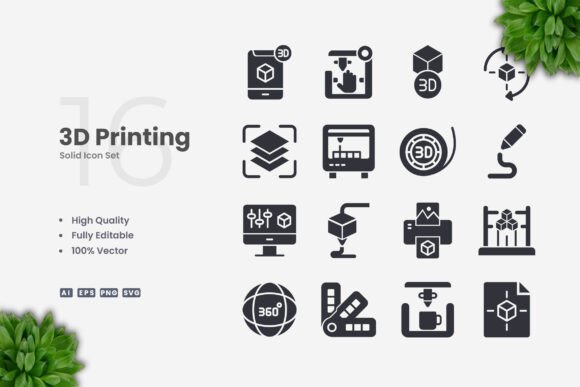
When I first opened the file, the immediate feeling was one of modern precision mixed with approachable creativity. The design is simple and clean icon design, which creates a mood that is both professional and inviting. Unlike overly complex illustrations that can feel cluttered or dated, these solid icons convey a sense of reliability and forward-thinking innovation. This emotional tone is crucial for brands targeting tech-savvy consumers, creative entrepreneurs, or lifestyle enthusiasts who value craftsmanship.
The visual consistency of the set ensures that every element feels like it belongs to the same family. For a brand owner looking to establish audience trust, this uniformity is non-negotiable. If your visuals look disjointed, your audience perceives your product as unpolished. These icons avoid that pitfall by offering a cohesive look that elevates the perceived value of any project they touch. Whether you are designing for casual branding or premium visuals, the clean lines provide a versatile foundation that adapts well to various aesthetic styles without losing its core identity.
Real-World Application: Launching a Product Line
To test the versatility of 3D Printing Solid Icons, I applied them to a comprehensive marketing project for a client launching a seasonal offer on custom printed goods. The goal was to create a unified visual language across multiple channels, from social media to physical packaging. The workflow required assets that could scale seamlessly from a tiny mobile notification icon to a large-format poster.
The results were impressive. Because the design allows you to easily edit color and size, we were able to adapt the visual hierarchy instantly. We used the icons as primary call-to-action elements in our digital ads, ensuring they stood out against busy backgrounds. In the content marketing phase, we utilized them to break up text-heavy blog posts and infographics, making complex information digestible and engaging. The ability to resize without losing quality meant our team could maintain crisp edges on everything from Instagram stories to high-resolution print banners.
Expanding Your Brand Identity Across All Channels
A robust brand identity relies on repetition and recognition. These icons proved to be an excellent tool for reinforcing brand memory across diverse mediums. In logo design concepts, they served as powerful symbols that communicated the essence of 3D technology and manufacturing at a glance. When placed on packaging design and product labels, they added a layer of sophistication that suggested high-quality materials and precise engineering.
For social media graphics, the impact was equally strong. We created a series of Pinterest pins and Facebook ads where the icons acted as visual anchors, drawing the eye directly to the offer. They worked beautifully in email banners and lead magnets, providing a professional appearance that encouraged higher open rates. Even in editorial design for media kits and printable promotions, these assets brought a modern flair that distinguished our client from competitors using generic clipart. The flexibility extends to web design headers and navigation elements, ensuring a seamless user experience across devices.
Strategic Marketing Goals and Visual Impact
Why invest in a dedicated design bundle like this? The answer lies in the strategic advantages it offers. First, it creates a stronger first impression. In a crowded digital marketplace, users decide within seconds whether to engage with your content. Clean, intentional icons signal professionalism and care. Second, they support better product presentation. By visually representing features or services, you reduce cognitive load for the customer, helping them understand your value proposition faster.
Furthermore, these assets foster an emotional connection. The 3D aesthetic implies depth and tangibility, which resonates well with audiences looking for physical products or tangible solutions. This leads to improved audience trust and stronger recognition over time. When your campaign visuals are memorable, your brand stays top-of-mind. Whether you are creating Canva templates for a team, designing merchandise, or preparing event flyers, having a library of high-quality design assets streamlines your workflow and ensures consistency.
Where These Assets Shine Brightest
3D Printing Solid Icons are particularly effective in specific contexts where clarity and style intersect. They excel as hero graphics and campaign headers, setting the tone for a landing page or promotional email. For product launch visuals, they serve as dynamic accents that highlight key features without overwhelming the main message. In branded templates, they act as decorative brand elements that add personality to otherwise standard layouts.
I also found them ideal for social media covers and packaging accents, where space is limited but impact is needed. When building content bundles or promotional banners, these icons help organize information logically. In editorial layouts, they function as bullet points or section dividers that guide the reader's eye naturally. Their solid fill style makes them perfect for Social media graphics where bold colors and clear shapes perform best under low-light conditions or on small screens.
Knowing When to Exercise Caution
However, even the best creative design tools have limitations. While these icons are versatile, there are scenarios where they should be used carefully. For formal corporate branding, such as in banking or legal sectors, the playful nature of 3D styling might feel too informal unless heavily stylized. In dense information layouts, too many icons can create visual noise rather than clarity.
Be mindful of placement on small mobile graphics where detail might get lost, or on low-contrast backgrounds where the solid fill might blend in. Overly minimal brands might find the texture of the 3D effect slightly distracting if their entire aesthetic is flat and monochromatic. Additionally, in text-heavy ads, ensure the icons do not compete with the main headline. Always prioritize the message; the icon should support the text, not overshadow it.
Essential Notes for the Professional Designer
Before integrating these graphics into your commercial projects, I recommend a few practical steps. Test the icons with your existing brand color palette to ensure harmony. Check their appearance in black and white to verify they retain their shape and meaning without color cues. Place them inside real campaign mockups to see how they interact with photography and typography.
Preview them on actual mobile screens to confirm readability in small sizes. Compare them against competitor visuals to ensure your brand stands out while maintaining industry standards. Experiment with pairing the icons against different font styles—serif fonts can create a sophisticated contrast, while sans serif fonts offer a modern match. Script or handwritten fonts can soften the look for lifestyle brands, and display fonts can amplify the boldness for events.
Finally, always review spacing and balance to ensure the icons breathe within your layout. Most importantly, confirm the commercial license before using them in paid campaigns, client work, or business branding. Understanding the licensing terms protects your investment and ensures you can use these SVG design or PNG design files freely across your platforms.
In conclusion, 3D Printing Solid Icons represent a valuable addition to any digital product or printable design toolkit. They are perfect for websites, mobile apps, books, social media, infographics, flyer, print, banners, posters and many more. By leveraging their clean aesthetic and editability, creators can produce professional branding that resonates with modern audiences. Whether you are a small business owner, online coach, or creative entrepreneur, these assets offer the flexibility and quality needed to elevate your visual storytelling.